The moment an alarm seems, individuals look for leadership. In every building that takes safety and security seriously, that leadership has a name: Chief Warden. The duty rests at the junction of incident command, clear communication, and practical risk control. Get it right, and you relocate hundreds of people comfortably toward safety and security. Obtain it incorrect, and an or else workable occasion can spiral.
I have dealt with security groups throughout workplaces, health centers, logistics sheds, and complex schools. The very best Principal Wardens share a handful of habits. They practice, they pass on, and they respect the changability of actual emergencies. They likewise recognize the competencies defined in nationwide systems such as PUAFER005 Operate as part of an emergency control organisation and PUAFER006 Lead an emergency control organisation, and they convert those competencies right into building-specific actions.
This write-up unloads the obligations of a Chief Fire Warden with the lens of event command, communication methods that stand up under stress, and the practical security controls that maintain people active when conditions alter quickly.
What the function really covers
A Chief Warden leads the emergency situation control organisation, or ECO, for a facility. That ECO consists of floor wardens, communications officers, initially aiders, and assistance wardens that assist individuals with impairment or mobility limitations. In many workplaces, the Chief Warden is likewise the head of a small command team that includes a Replacement Chief Warden, an Emergency Situation Communications Officer at the fire sign panel, and area wardens who report from their zones.
The Chief Warden is in charge of decisions concerning discharge timing and mode, sychronisation with emergency situation solutions, allowance of tasks to wardens, and the flow of details in between the structure and -responders. That appears clean on paper. In practice, it includes judgment telephone calls when details is partial and time is short.
A useful example. In a ten‑storey workplace with a lunchroom on level 3, an alarm isolates to a cooking area detector and the suppression system has actually launched. Smoke shows up on CCTV however not in the main stairway. The Chief Warden need to select in between a staged evacuation by areas or a complete structure emptying. At the very same time, lifts are still operating, and a service provider in the basement is welding with a warm work license. The right phone call relies on the strategy, the panel information, and relied on records from flooring wardens.
Incident command, not simply administration
A Chief Warden is an event commander up until fire and rescue take control of. The command design is basic: develop control, gather info, choose, connect, and verify. The PUAFER006 lead an emergency control organisation unit captures this management arc. It likewise stresses that command is scalable. In a small single‑storey center, the Chief Warden may be the only warden on website in the beginning. In a medical facility or circulation centre, they might have twenty wardens to deploy in waves.

Establishing control starts where details converges. In numerous structures, that is the fire sign panel, sustained by a warden intercom or two‑way radios. The Chief Warden should literally find now where feasible. If smoke or a threat maintains them away, the Replacement should action in, and the Chief Warden runs command remotely making use of the comms channel designated in the plan.
Gathering information implies more than listening to alarm systems. Good Chief Wardens established a rhythm. They direct wardens to perform a quick move of their area, check critical areas like plant spaces and laboratories, verify if prone residents are in place, and report up making use of a concise style. I such as the straightforward sequence: area, condition, activity, head count. An example sounds like this: South wing level 4, smoke visible in kitchen space, sweeping eastern hallway, 24 represented so far.
Decide and communicate are indivisible. In fire events, the default predisposition is to leave early, but staged emptyings can shield residents from smoke migration while keeping stairs clear for those closest to danger. This is where training, drills, and building layout expertise matter. A Chief Warden who understands the smoke control approach and the distinction between alarm system and alert signals can securely series a staged movement. The wrong call can push individuals right into a smoke layer or overfill a stair.
Verification is the last loophole. If you order an evacuation of degrees 3 to 5 first, you require a confirmation that those floorings are clear and the traveling course is secure. That verification comes from wardens reporting clear zones and from on‑the‑ground detects: air top quality, warmth, and the integrity of the departure path.
Communication that works under stress
The tranquility, neutral tone of a Chief Warden travels farther than any kind of private direction. Individuals simulate the power they listen to. If the voice on the PA is composed, guidelines land.
In most facilities, the Chief Warden uses a mix of the public address system, warden intercom phones, and UHF or electronic radios. Radios require self-control. Keep transmissions short, avoid overlap, and shield concern for immediate website traffic. Customized call indications aid, also in tiny groups. Rather than names, utilize functions and areas: Principal, Replacement, Red 2 North, Comms.
Public address messages should be prepared, practiced, and kept within plain language. Time stamps help, particularly in lengthy events. An example for an alert tone activation: Interest please. This is the Chief Warden. At 10:42 we have an alarm system in the level 3 kitchen. Wardens on degrees 2 with 4 commence area checks and record. All various other residents, stand by for instructions.
For evacuation statements, the keywords are area, activity, and course. If a key exit is endangered, call the alternative very early. Every additional sentence includes confusion. This is one location where PUAFER005 operate as part of an emergency control organisation hammers home the skill of concise, exact communication from every warden, not just the Chief.
Radio rules issues when smoke and sirens increase stress and anxiety. I always embed 2 guidelines in warden training. Initially, recognize receipt of a task so the Chief Warden knows it landed. Second, when reporting a danger, state the functional effect, not just the observation. Instead of Door on stairway 1 is hot, claim Stair 1 is harmful, evacuating via Stairway 2 west.
Safety choices with genuine consequences
Evacuation is not the only security device. Shelter in place, compartmentalisation, partial discharges, and horizontal movings all have their location. The option depends on the risk: fire, smoke, chemical spill, physical violence, or exterior threat like a harmful plume or civil disturbance.
In fire events, the usual rule is to move people away from heat and smoke, after that out of the building if risk-free courses exist. In centers with high‑rise qualities, vertical motion can be a risk itself. Stairs come to be chokepoints, and a single collapsed individual can obstruct a touchdown. The Chief Warden must weigh evacuation rate against stairwell lots. Where pressurised stairs exist, prioritise those. If a stair is smoky, consider postponing low‑risk floors in favor of getting rid of the affected degrees and above, then re‑assessing.
In health care and aged treatment, horizontal emptying through fire compartments is often safer and faster than upright emptying. This calls for pre‑planning, personnel numbers, and equipment like emptying sleds. A Chief Warden in these settings needs a deep understanding of the fire matrix and a tight link with clinical leadership.
Electrical or plant room cases bring various hazards. You might have online power, arc flash threat, or gases. In these cases, contact with facilities administration is important. A Chief Warden need to recognize precisely that commands to separate systems and just how to verify that an isolation has happened. If your building relies on a BMS to close down air handling systems in alarm, verify the condition, not simply the command.
Building the ECO: roles, colours, and competence
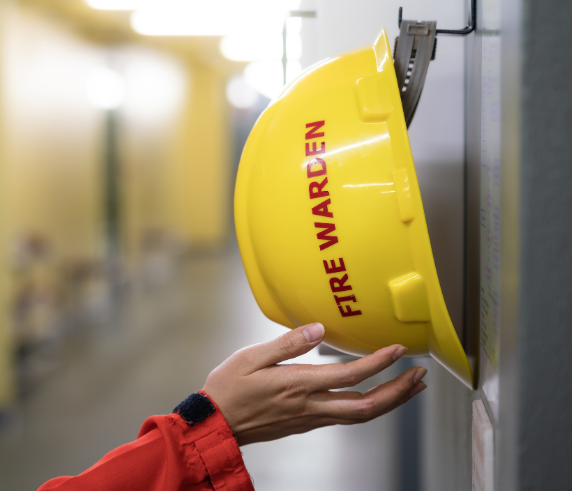
Colours matter due to the fact that exposure puncture noise. In numerous Australian offices, Chief Warden hats or headgears are white, and wardens put on red. Communications police officers often use blue, and very first aiders utilize eco-friendly. The chief warden hat colour and chief fire warden hat colour convention throughout Australia leans white, which responds to the frequent concern, what colour helmet does a chief warden wear. Check your local standard or business plan, as some industries fine‑tune colours for additional roles.
Beyond colours, skills carries the day. Fire warden training and chief warden training need to be regular, scenario‑based, and grounded in the structure's details dangers. The puafer005 course prepares wardens to operate as part of an emergency control organisation: sweeping, communicating, helping emptying, and coverage. The puafer006 course develops the management muscle mass to lead an emergency control organisation: decision making, interaction technique, and control with responders.
I have actually seen the distinction a certain ECO makes. In a logistics facility, a forklift battery fire placed heavy smoke via a 3rd of the storehouse within 2 mins. The Chief Warden right away split the emptying, maintained the south egress clear for a spill set team, and had a floor warden rendezvous with the first fire crew at the A‑side roller door with a show and MSDS printouts. The building re‑opened within hours due to the fact that the ECO consisted of the chaos.
The task cycle prior to, during, and after an incident
Duties change across the lifecycle. Before an incident, the Chief Warden possesses preparedness: staffing the ECO, leading drills, evaluating the emergency situation strategy, and examining tools like warden intercom phones, radios, and emptying chairs. Throughout an incident, the focus tightens to command and communication. Afterward, the role broadens to debrief, documentation, and corrective actions.
Readiness starts with genuine numbers. How many people inhabit each flooring at top? What portion have never gone to a drill? Are change patterns leaving gaps in wardens on evenings or weekend breaks? Do you have a plan for specialists, customers, and visitors, who commonly account for 10 to 30 percent of individuals on site? A Chief Warden needs a roster that covers these truths, not an idealised normal.
Fire warden demands in the work environment often consist of a minimum proportion, as an example one warden per 20 team in open workplaces, or one per compartment in healthcare. Proportions are a beginning point. The far better examination is insurance coverage by area and function. Can someone get to every stairway door swiftly? Is there a warden who recognizes exactly how to evacuate the lab? Who possesses the child care center move if you have one? When I investigate a site, I map warden coverage by time of day and task, not simply headcount.
During the occurrence, the Chief Warden maintains the time line in view. Notes matter. A cheap clipboard at the panel with a one‑page occurrence log theme works. Tape time of alarm system, orders provided, areas got rid of, solution arrival, any kind of diversions from strategy, and the moment you proclaimed all clear. Those notes become gold in the debrief and in regulative reporting.
After the case, the debrief is your lever for renovation. Keep it brief and structured. Concentrate on what was observed, what was chosen, and what outcomes complied with. If communication failed on the north stair because of radio dead areas, examination and fix. If a brand-new tenant changed the furniture strategy and obstructed a warden sight line, adjust routes and upgrade the plan.
Training that lands when the alarm sounds
Effective warden training draws a straight line from competencies to the structure. The puafer005 operate as part of an emergency control organisation web content covers alarm systems and advising systems, emptying concepts, and warden responsibilities. It ought to attach to your real panel, your PA system, and your discharge maps. Wardens require to practice voice messages, not just review them.
The puafer006 lead an emergency control organisation web content adds situation leadership, liaison with emergency situation solutions, and the coordination of wardens. Below, table‑top workouts shine. Place the Chief Warden at a simulated panel. Replicate reports from wardens over the radio. Include an unaccounted person or an obstructed stair, after that compel a decision. 5 differed scenarios will educate more than a lengthy lecture.
Fire warden training requirements vary by sector, but 2 concepts apply throughout the board. Train at induction and revitalize at least every year, with additional drills after significant fit‑outs or system changes. Rotate situations. Emptyings are not always fire. Try a chemical spill on a filling dock, a lift entrapment with smoke in the shaft, or a partial power failure on a summer season mid-day. Exercise the handover to emergency situation solutions, consisting of a concise briefing: location, type of event, actions taken, condition of occupants, and any risks such as gas, batteries, or combustibles.
Equipment and facilities the Chief Warden have to know
A Chief Warden ought to be well-versed in the building's protective functions. That consists of the fire sign panel format, detector and lawn sprinkler areas, the cause‑and‑effect matrix for alarm, sharp, and suppression, staircase pressurisation fans, smoke exhaust, and the user interface with a/c. In some centers, closing down air handling in a zone stops smoke spread. In others, it is managed immediately. Know which applies prior to the alarm system, not during.
Exits need evaluation. Doors need to self‑close and latch, seals should not be harmed, and no person ought to have propped them open with wedges or containers. In high‑traffic rooms, this takes place weekly. Wardens are frequently the eyes that discover and deal with these concerns. The Chief Warden establishes the inspection timetable and holds supervisors to it.
Communication equipment deserves its very own checks. Radios have to be billed and saved in an understood place, preferably in a grab bag at reception or the panel. Extra batteries matter in lengthy events. Evaluate the warden intercom monthly, floor by flooring. Keep published layout with significant leaves and hydrants next to the panel. If your command point sheds power, you still require a map.
Common rubbing points and how to deal with them
Real emergencies expose small oversights. I usually find 3 persisting friction points.
First, unpredictability concerning authority. New Principal Wardens occasionally hesitate to offer firm orders since they do not want to disrupt service. The emergency plan must state plainly that the Chief Warden has authority to guide emptying and control motion in an emergency situation. Senior managers must recommend this in public so no one threatens the command when it counts.
Second, specialists and visitors. Access systems and sign‑in apps generate checklists, yet those checklists are seldom prepared when the alarm appears. The fix is step-by-step. Function or the service provider manager becomes a reporting node in the ECO, with a basic duty: bring the site visitor log or the gadget with the checklist to the assembly point and mark off known visitors with the support of flooring wardens. In high‑risk centers, concern visitor badges with zone codes and a short discharge guideline printed on the back.
Third, mobility support. Every building has people who can not take stairs easily, whether completely or simply today as a result of an injury. The Chief Warden need to maintain a personal movement support plan with alternates for every person. Assembly areas on each level near staircases, called refuges in some designs, need to be functional, secured, and known. Emptying chairs audio fantastic in plan, yet they require actual method. Schedule it, and rotate staff.
Working with emergency situation services
A polished handover conserves time. When fire staffs get here, the Chief Warden need to fulfill the officer in charge at the panel or designated entrance, putting on the chief warden hat or vest for instantaneous recognition. Offer a 30‑second short: developing name and address, nature of the chief warden responsibilities case, place by zone and degree, what systems have turned on, actions taken, status of emptying, and any unaccounted persons or unique threats like oxygen shops, lithium batteries, or fuel. Then go back and answer concerns. Maintain your radio website traffic clear so you can communicate requests from the staffs to wardens, such as validating an area or disabling a device.
After the occasion, some jurisdictions need chief warden training a written record, especially when a false alarm involved brigade attendance. Your case log, alarm system history printout, and warden reports will develop the foundation of that documentation. Use them to refine the strategy and to warrant changes in training or equipment.
The human side of a high‑stakes role
Chief Warden is not a ceremonial title. In difficult moments, you will choose that impact the safety of associates, clients, and visitors. It helps to utilize routines to consistent on your own. I maintain three anchors.
First, take a breath prior to you talk on the PA. One calm breath collections your tone. Second, repeat back important info on the radio so the sender knows you heard it appropriately. Third, imagine the building as you decide. If you recognize your staircases, your areas, and your people, the appropriate direction becomes clearer.
You will also really feel the pressure to show rate or toughness. Do not determine performance by how rapidly everyone hits the walkway. Step it by whether the motion matched the hazard, whether vulnerable people were sustained, whether interaction landed, and whether the handover to emergency situation solutions was smooth.
Choosing and creating your ECO
Selecting wardens needs more than a lineup workout. The most effective candidates are those with attention to detail, calm personalities, and a readiness to rehearse. Shift protection matters as high as head count. If your building runs over long hours, buy extra wardens for mornings and nights, and think about stipends or rostered time for training. For websites with numerous lessees, develop a building‑wide ECO that brings tenant wardens under a common Chief Warden structure for common areas.
Chief warden demands vary, yet a solid standard consists of completion of a chief warden course aligned to puafer006, familiarity with your emergency strategy, showed radio and PA ability, and engagement in at the very least 2 drills annually as lead. For brand-new Principal Wardens, shadowing the present lead via drills and table‑tops builds confidence before their first live event.
Where formal training fulfills lived practice
Most territories recognise the PUAFER units as an organized path. Yet badges alone will not move people down the stairway. The bridge between the puafer005 course and the puafer006 course and day‑to‑day capacity is intentional technique in your building.
If you are carrying out a fire warden course program, blend concept with building strolls, panel time, and map reading. For an emergency warden course concentrated on non‑fire cases, consist of circumstances like gas leaks, terrible burglars, or exterior dangers requiring sanctuary in position. Emergency warden training must line up with the details risks of your operations, whether that is an R&D lab, a retail facility, a storehouse with high‑bay storage, or a school.

I like short, frequent drills over rare, sophisticated ones. 10 minutes every 2 months defeats one grand drill a year. Stagger them across times and contexts. Draw the alarm at shift adjustment when. Practice a quiet drill where only wardens relocate and report. Run a complete discharge on a stormy day, because that is when people withstand and lessons stick.
A concise recommendation for the Principal Warden
- Core command cycle: establish control, gather details, determine, communicate, verify. Communication anchors: clear telephone call indicators, short transmissions, PA messages with area, action, and route. Safety options: complete or organized emptying, straight moving, or shelter in position, based upon risk and building design. People focus: wheelchair support strategies, site visitors and professionals made up, evaluated setting up areas. Continuous improvement: event logs, structured debriefs, targeted fixes to comms, courses, and training.
Final ideas from the field
When smoke is in the air, people listen to the clearest voice. A Chief Fire Warden gains that focus by preparing non-stop, practicing choices, and developing a team that can execute under stress. The title brings particular responsibilities, from incident command to communication and safety and security management, and the abilities are teachable with warden training secured in PUAFER005 and PUAFER006. The art sits in using those skills to the facts of your structure, your people, and your risks.
Whether you put on the white chief warden hat in a small office or work with a big ECO across multiple towers, the core remains the same. Know your plan, recognize your structure, know your group. Then, when the alarm appears, do the easy things well and in the best order. That is just how you turn a poor moment into a secure outcome.